Ayurvedic Treatment for Disc Prolapse & Disc Bulge in Chennai
At Shree Kriyas Ayurveda Hospitals on OMR, Chennai, we offer Ayurvedic treatment for disc prolapse and disc bulge (slipped disc). If you live with back pain that spreads down your legs, numbness, tingling or muscle weakness, our Ayurvedic doctors assess your condition and plan therapies, herbal medicines and lifestyle advice to ease the pain and help you move more comfortably.
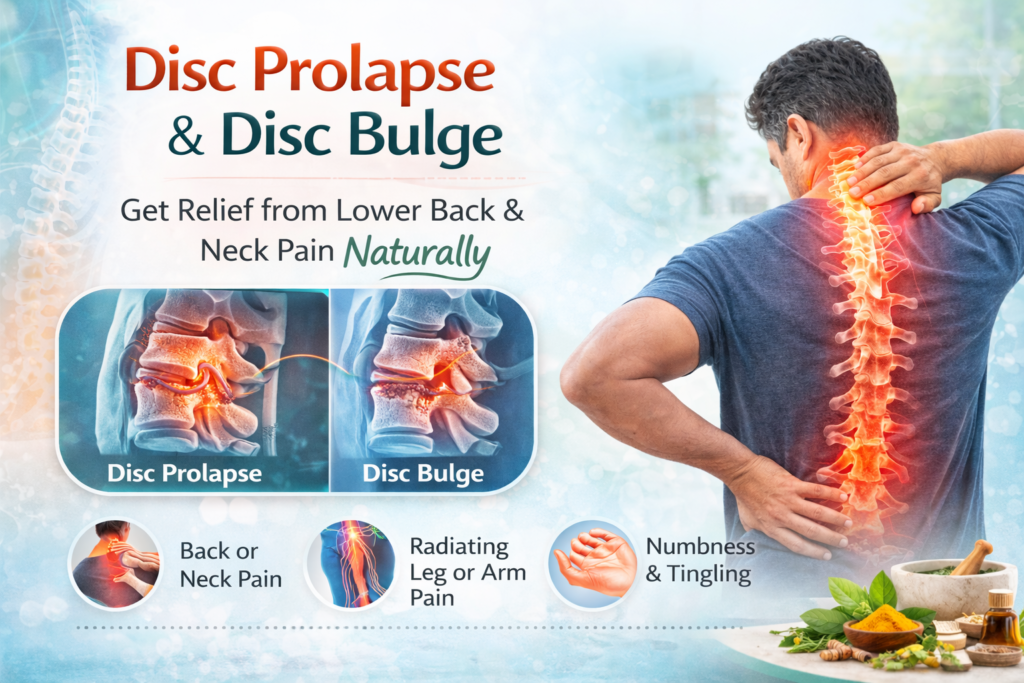
A disc prolapse, also frequently referred to as a slipped disc or herniated disc, is a condition affecting the intricate structure of your spine. Imagine the vertebrae, the bones that make up your spinal column, separated by cushion-like pads called intervertebral discs. These discs have a tough outer layer, the annulus fibrosus, and a soft, gel-like center, the nucleus pulposus. When a tear develops in this outer ring, the inner gel can bulge or protrude outwards, pressing on nearby nerves. This pressure can lead to a cascade of uncomfortable and often painful symptoms.
Causes of Disc Prolapse and Disc Bulge
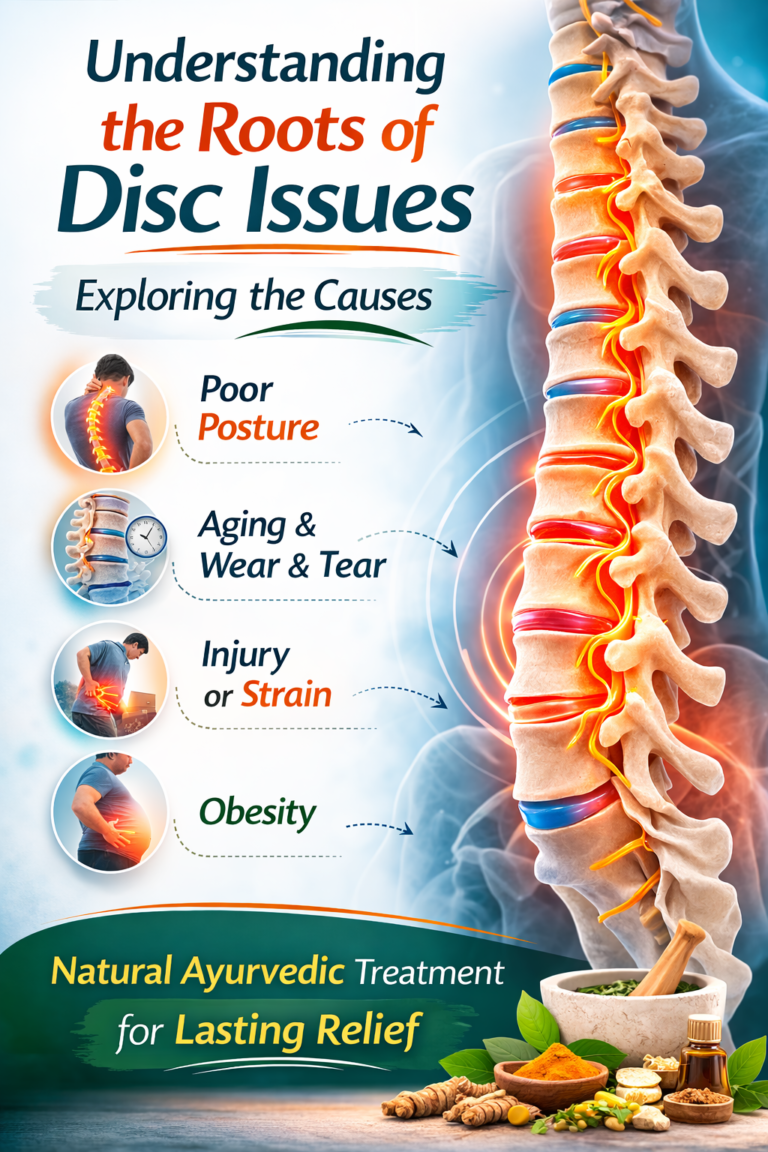
The Natural Process of Aging:
As we age, the intervertebral discs naturally lose some of their water content, making them less flexible and more susceptible to tears and degeneration.
The Impact of Incorrect Posture and Lifting Techniques:
Improper body mechanics, especially while lifting heavy objects, can place excessive stress on the spine and the discs, increasing the risk of injury.
The Burden of Obesity
Excess weight puts added pressure on the spinal discs, particularly in the lower back, making them more vulnerable to bulging or herniation.
The Trauma of Falls or Sudden Shocks:
Accidents, falls, or sudden impacts on the spine can cause direct trauma to the intervertebral discs, leading to tears or displacement.
The Strain of Repetitive Movements and Sedentary Lifestyles
Certain occupations or activities involving repetitive bending, twisting, or prolonged sitting can contribute to the wear and tear of spinal discs over time.
Genetic Predisposition
In some cases, individuals may have a genetic predisposition that makes their spinal discs more prone to degeneration or injury.
Symptoms of Disc Prolapse and Disc Bulge
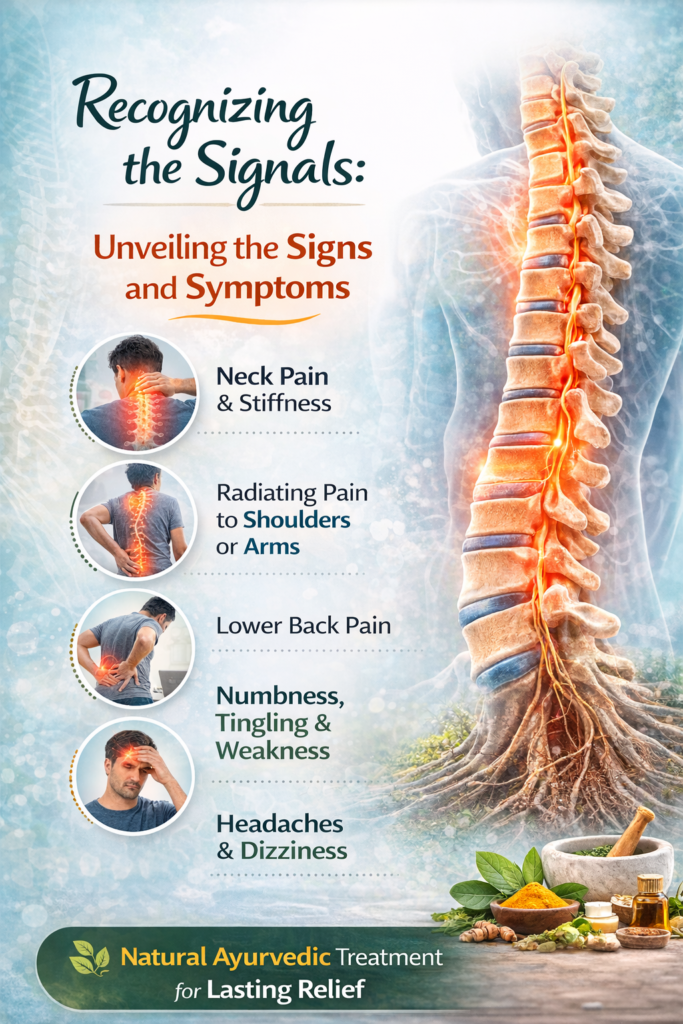
The symptoms of a disc prolapse or disc bulge can vary widely depending on the location and severity of the nerve compression. It’s important to be aware of these potential signs:
Localized Back Pain: While not always the initial symptom, pain in the back, particularly in the lower back (lumbar region), is a common complaint.
Radiating Pain: A hallmark symptom is pain that travels along the path of the affected nerve root. If the herniation is in the lumbar spine, this pain often radiates down the buttock, thigh, and into the leg and foot (sciatica).
Pain Aggravated by Specific Positions or Movements: Patients often find that certain postures, such as sitting, bending forward, coughing, or sneezing, can intensify their pain. Conversely, lying down may provide some relief.
Numbness and Tingling: Compression of the nerves can lead to sensations of numbness or tingling in the legs, feet, or even the arms, depending on the location of the disc issue.
Muscle Weakness: The affected nerve can also cause weakness in the muscles it supplies, making it difficult to lift the foot or toes (foot drop) or grip objects firmly.
Altered Reflexes: A physical examination by a healthcare professional may reveal changes in reflexes in the affected limbs.
In Severe Cases: In rare instances, severe nerve compression can lead to loss of bowel or bladder control, which needs emergency medical care straight away.
It’s crucial to remember that the intensity and combination of these symptoms can differ significantly from person to person. Sometimes, a disc bulge might cause only mild discomfort, while a prolapse can lead to severe, debilitating pain.
Ayurvedic Disc Prolapse Treatment at Shree Kriyas, Chennai
At Shree Kriyas Ayurveda Hospitals, our Ayurvedic doctors begin with a thorough assessment of your disc prolapse or disc bulge, considering your constitution (Prakriti), imbalances (Vikriti) and symptoms, and then create a treatment plan for you. The plan focuses on Detoxification (Shodhana) and Rejuvenation (Rasayana) and may include:
- Panchakarma detox – Panchakarma procedures chosen by your doctor to cleanse and rebalance the body.
- Kati Vasti – a local treatment with warm medicated oil held over the lower back.
- Abhyanga – an Ayurvedic oil massage to relax stiff muscles around the spine.
- Basti – medicated enema therapy, one of the five main Panchakarma procedures.
- Ayurvedic medicines and diet advice – herbal formulations, diet and daily-routine guidance to support your recovery.
To learn more about how Ayurveda approaches back problems, read our guide to Ayurvedic back pain treatment.
We are committed to compassionate care on your journey to recovery from disc prolapse and disc bulge. Book a consultation with our Ayurvedic doctors in Chennai to discuss your treatment.